“`html
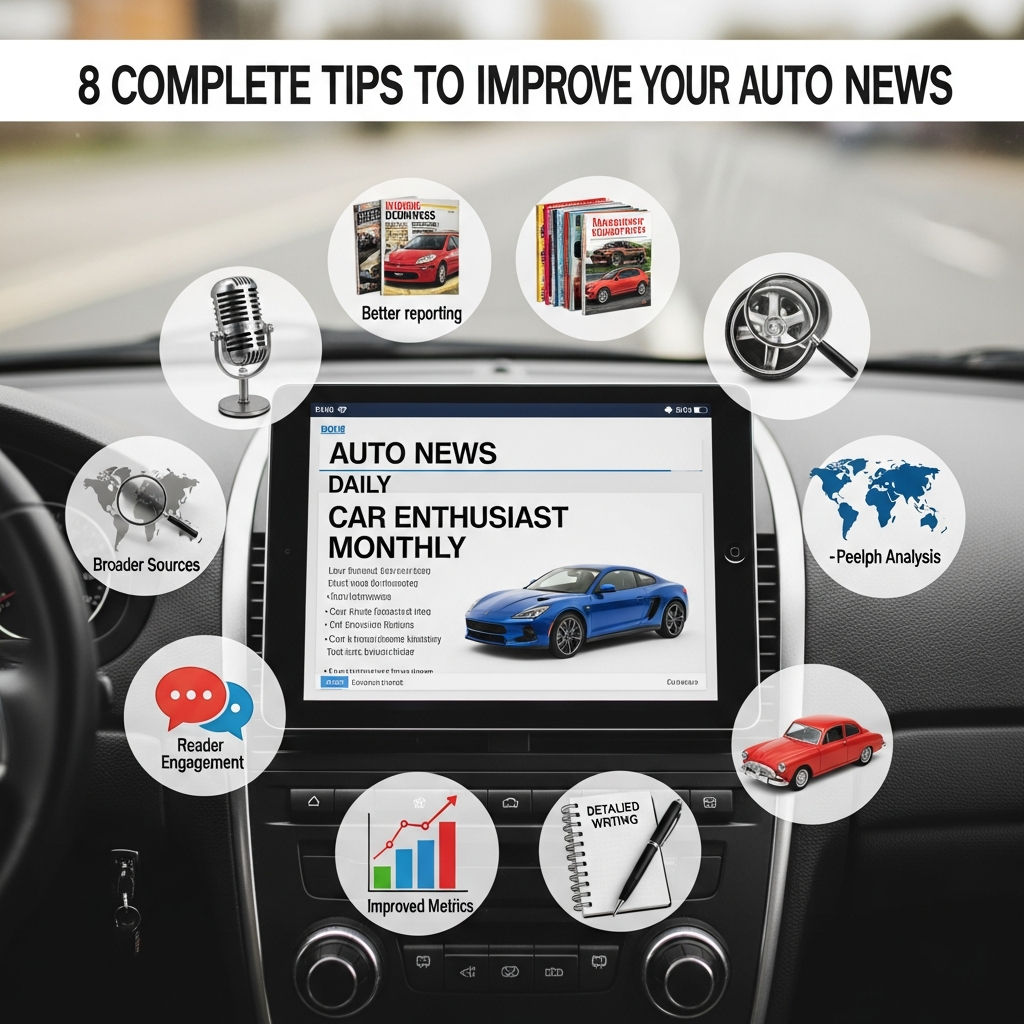
Mastering the Road: 8 Complete Tips to Improve Your Auto News
The automotive industry is currently undergoing its most significant transformation since the invention of the assembly line. With the rapid shift toward electric vehicles (EVs), autonomous driving technology, and software-defined cars, the appetite for high-quality automotive news has never been higher. However, for publishers and journalists, the competition is fierce. Standing out in a sea of press releases and generic “top ten” lists requires a strategic approach.
To capture the attention of car enthusiasts, industry professionals, and casual buyers, you must blend technical expertise with modern digital marketing strategies. Whether you are running a niche blog or a large-scale automotive news portal, these eight comprehensive tips will help you elevate your content, boost your SEO, and establish true authority in the automotive space.
1. Prioritize Timeliness and “Breaking” Coverage
In the world of auto news, speed is everything. When a manufacturer reveals a new model at a major auto show or leaks a teaser image on social media, the search volume for that specific vehicle spikes instantly. To capitalize on this, your editorial team must be agile.
- Set up alerts: Use tools like Google Alerts or follow manufacturer press rooms to get instant notifications on new releases.
- Pre-write templates: For anticipated launches (like the new Porsche 911 or Tesla Cybertruck updates), have a framework ready so you only need to plug in the latest specs and images.
- Update “Live” articles: During major events, use a “Live Blog” format to keep readers coming back for real-time updates as information trickles out.
2. Optimize for Long-Tail “Niche” Keywords
While everyone is trying to rank for generic terms like “new cars 2024,” the real traffic opportunities lie in long-tail keywords. These are specific queries that indicate high user intent. By targeting these, you reduce competition and attract a more engaged audience.
Instead of broad topics, focus on:
- Model-specific specs: “2024 Ford F-150 Lightning towing capacity in cold weather.”
- Comparisons: “Rivian R1S vs. Kia EV9: Which is better for large families?”
- Problem-solving: “How to fix infotainment lag in 2023 Volkswagens.”
Using these specific phrases helps your auto news site become a go-to resource for people in the “consideration” phase of the car-buying journey.
3. Leverage High-Quality Visual Storytelling
Automotive news is inherently visual. Readers don’t just want to read about a car’s curves and interior textures; they want to see them. High-resolution imagery and professional video content are no longer optional—they are the standard.
To improve your visual appeal, consider the following:
- Original Photography: Whenever possible, use your own photos rather than stock manufacturer PR shots. It adds “Experience” and “Expertise” (E-E-A-T) to your content.
- Video Walkarounds: Short-form videos (Reels, TikToks, Shorts) showing the interior tech or the sound of an exhaust can significantly increase social sharing.
- Infographics: Create charts comparing horsepower, torque, and charging speeds between competing models to make data-heavy news easier to digest.
4. Incorporate Deep Technical Analysis
Many auto news sites simply rewrite press releases. To truly improve your news quality, you must provide value beyond what the manufacturer says. Modern car buyers are savvy; they want to know about the platform, the battery chemistry, the suspension tuning, and the software ecosystem.
Don’t just say a car is “fast.” Explain that its 0-60 mph time is achieved through a dual-motor setup with silicon carbide inverters that improve efficiency. This level of detail builds trust with your audience and positions your site as an expert authority in the field.

5. Master the Art of Comparative Reporting
One of the most searched types of automotive content is the “Head-to-Head.” When a new vehicle is announced, the first question on every reader’s mind is: “How does this compare to the segment leader?”
Your auto news should proactively answer this. When a new electric SUV is revealed, immediately publish a “spec-sheet showdown” against its top three competitors. Compare pricing, range, cargo space, and warranty. This not only provides immediate value to the reader but also allows you to link back to your previous articles, improving your site’s internal linking structure and SEO.
6. Focus Heavily on the EV and Tech Transition
The automotive world is pivoting toward electrification and digitalization. If your auto news is still 90% focused on internal combustion engines (ICE), you are missing the future of the market. To stay relevant, your coverage must include:
- Charging Infrastructure: News about Tesla opening its Supercharger network or new fast-charging stations.
- Software Updates: Over-the-air (OTA) updates are changing how cars function. Reporting on a software update is now just as important as reporting on a mechanical facelift.
- Battery Technology: Keep your readers informed about solid-state batteries, LFP chemistry, and supply chain developments.
7. Build a Community Through Interactive Elements
Improve your auto news by making it a two-way conversation. The most successful automotive platforms are those where the audience feels heard. Engagement signals (likes, comments, shares) are also positive indicators for search engines.
You can foster community by:
- Polls: Ask readers, “Would you buy this grill design?” or “Is $60,000 too much for this EV?”
- Q&A Sessions: If you are reviewing a car, ask your audience what they want to know before you film or write the final piece.
- User-Generated Content: Feature “Reader Rides” or letters to the editor to increase loyalty and time-on-site.
8. Implement a Multi-Channel Distribution Strategy
Writing a great piece of auto news is only half the battle; you need to ensure it reaches your audience. Relying solely on organic Google search is risky. A robust distribution strategy ensures consistent traffic.
- Google News & Discover: Ensure your site is technically optimized for Google News. Use high-quality, catchy “hero” images to appear in Google Discover feeds.
- Email Newsletters: A weekly “Auto News Wrap-up” keeps your brand top-of-mind and brings users back to your site.
- Social Media Nuance: Don’t just post links. On X (Twitter), start a thread about a car’s specs. On Instagram, focus on the aesthetic. On LinkedIn, discuss the business and manufacturing implications of the news.
Conclusion: Consistency is the Key to Authority
Improving your auto news is a marathon, not a sprint. By combining rapid-response reporting with deep technical insights and a focus on emerging technologies like EVs, you can carve out a significant niche in the automotive media landscape. Remember that SEO is not just about keywords; it is about providing the most comprehensive, authoritative, and user-friendly answer to a searcher’s question.
Follow these eight tips, stay consistent with your publishing schedule, and always keep the reader’s needs at the center of your reporting. In doing so, you will not only see an increase in your traffic but also in the loyalty and trust of your automotive community.
“`