“`html
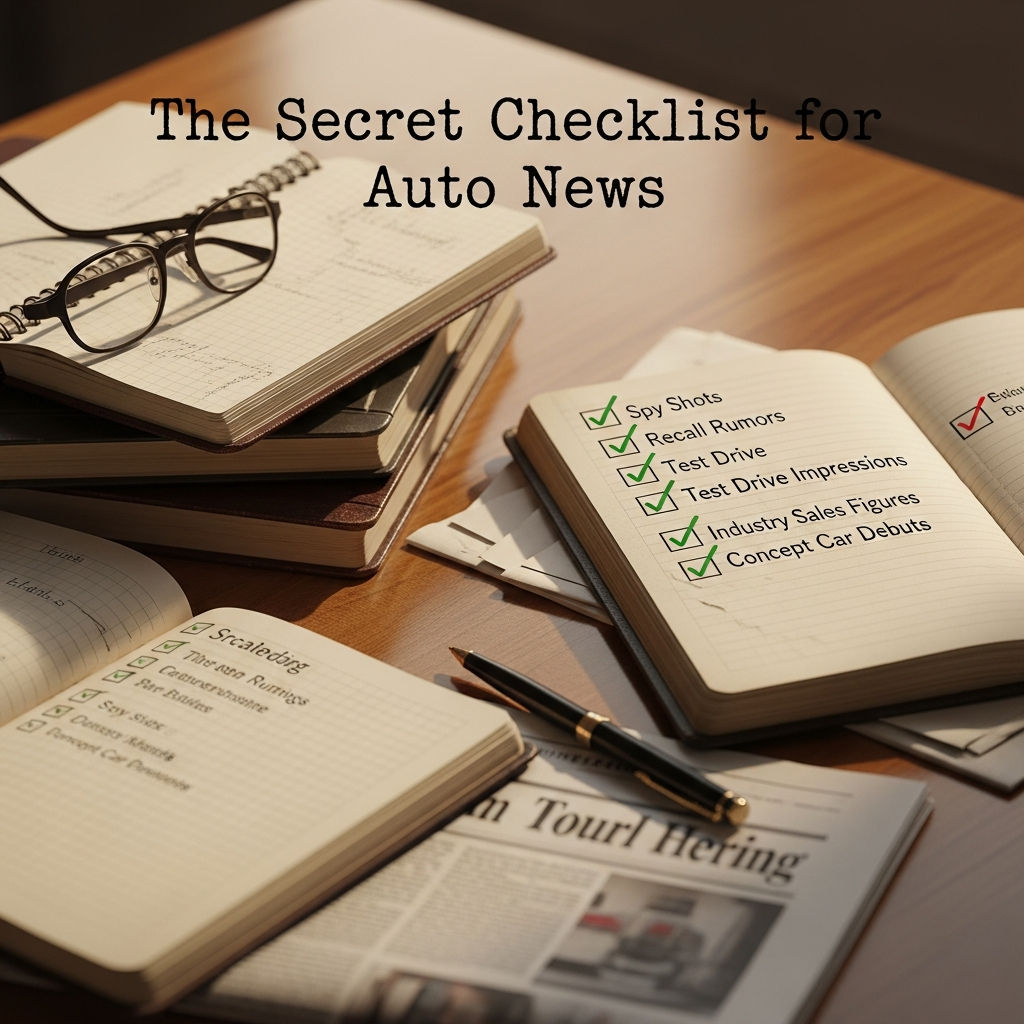
The Secret Checklist for Auto News: How to Dominate the Automotive Niche
In the high-octane world of automotive journalism, staying ahead of the curve isn’t just about speed; it’s about precision, authority, and strategy. Whether you are covering a global reveal at the Geneva Motor Show or reporting on the latest EV battery breakthrough, the competition for clicks is fierce. Thousands of blogs and news outlets vie for the same eyeballs, but only a few consistently rank on the first page of Google.
What separates the industry leaders from the hobbyists? It is a rigorous, often unspoken, “Secret Checklist.” This checklist ensures that every piece of auto news published is optimized for search engines, credible to enthusiasts, and valuable to potential car buyers. In this guide, we reveal the essential steps every creator should take before hitting “publish.”
1. Technical Accuracy and Spec Verification
In the automotive world, one wrong number can destroy your credibility. Car enthusiasts are notoriously meticulous. If you misquote the zero-to-sixty time or confuse a dual-clutch transmission with a traditional torque converter, your comment section will let you know instantly.
- Verify Engine Specs: Always double-check horsepower, torque, and displacement. If the data comes from a leak, specify that these are “estimated” or “projected” figures.
- Platform and Chassis Details: Knowing if a car shares a platform with another model (e.g., the Supra and the BMW Z4) adds depth to your reporting.
- Trim Level Nuance: Make sure you distinguish between base models and performance variants. A “GT” badge means something very different from a “base” badge.
2. The Speed vs. Quality Dilemma
Breaking news is the lifeblood of auto journalism. When a “spy shot” of a camouflaged prototype hits the web, the race is on. However, being first is useless if your content is thin or inaccurate. The secret checklist involves a two-step process: the “Quick Alert” followed by the “Deep Dive.”
The “Flash” Report
Get the core facts out immediately. Who is the manufacturer? What is the model? What was spotted? This secures your timestamp in the news cycle.
The Comprehensive Update
Within the hour, update your post with context. How does this new model compare to its predecessor? What are the market implications? Google rewards “freshness,” and updating an existing high-traffic URL is often better than publishing three separate, thin articles.
3. Mastering SEO for Automotive Content
Search Engine Optimization (SEO) is the engine that drives traffic to your auto news. Without it, even the best-written car review remains invisible. To rank well, you must understand how car buyers and enthusiasts search.
- Long-Tail Keywords: Instead of targeting “New Ford Truck,” target “2025 Ford F-150 Lightning Range and Towing Capacity.” Specificity captures users further down the purchase funnel.
- Strategic Header Tags: Use H2 and H3 tags to break down the article into logical segments: Performance, Interior, Technology, and Pricing.
- Model-Year Inclusion: Always include the model year in the title. In the auto world, the difference between a 2023 and a 2024 model can be a complete redesign.
4. High-Resolution Visual Storytelling
Automotive news is a visual medium. Readers want to see the lines of the bodywork, the texture of the leather, and the interface of the infotainment system. High-quality imagery is a non-negotiable item on the checklist.
Ensure your images are optimized for the web. Large, uncompressed files will slow down your site, hurting your SEO rankings. Use WebP formats and ensure every image has descriptive “Alt Text.” For example, instead of “image01.jpg,” use “2024-Porsche-911-Interior-Dashboard.” This helps Google Image Search find your content.
5. The “So What?” Factor: Consumer Impact
The secret ingredient to a viral auto news story is explaining *why* it matters. Reporting that a manufacturer is switching to a new type of steel is boring. Reporting that this switch will make the car 200 pounds lighter, resulting in better fuel economy and sharper handling, is news.

Connecting with the Reader
Every piece of news should answer these questions for the reader:
- Will this make my current car obsolete?
- Is this a feature I should wait for before buying a new vehicle?
- How does this pricing affect the rest of the segment?
6. Proper Attribution and Sourcing
The automotive community relies heavily on a network of insiders, “spy” photographers, and press releases. Maintaining the secret checklist means being honest about your sources. If you are summarizing a report from Car and Driver or MotorTrend, give them a clear backlink.
Not only is this ethical journalism, but it also builds a “link neighborhood” that search engines recognize. Linking to high-authority sites tells Google that your content is part of a legitimate ecosystem of information.
7. The Post-Publishing Checklist
Your job isn’t done once you click publish. To maximize the reach of your auto news, follow these final steps:
- Social Media Tailoring: Create a different hook for LinkedIn (business/industry focus), Instagram (visual/aesthetic focus), and X/Twitter (breaking news/debate focus).
- Internal Linking: Go back to older, related articles and link them to your new story. This keeps readers on your site longer and passes “link juice” through your domain.
- Engagement Monitoring: Answer questions in the comments. When a reader asks, “Does this model have physical volume knobs?” and you answer them, you build brand loyalty that a generic news site can’t match.
8. Anticipating Future Trends (The “Evergreen” Layer)
While news is often fleeting, the best auto journalists know how to bake “evergreen” value into a news story. If you are reporting on a new EV reveal, include a section about the current state of charging infrastructure or a brief history of that brand’s transition to electric power.
This ensures that even after the “newness” of the story fades, your article remains a valuable resource for people researching the broader topic. This strategy is essential for building long-term domain authority in the competitive automotive niche.
Conclusion: Quality Drives Results
The “Secret Checklist” for auto news isn’t about shortcuts; it’s about creating a standard of excellence. By focusing on technical accuracy, aggressive SEO, high-quality visuals, and meaningful consumer context, you transform a simple news update into an authoritative piece of journalism.
As the industry shifts toward electrification, autonomous driving, and software-defined vehicles, the complexity of automotive reporting will only increase. Those who stick to a rigorous checklist will find themselves at the top of the search results, while others get left in the rearview mirror. Start implementing these steps today, and watch your automotive content performance accelerate.
“`