
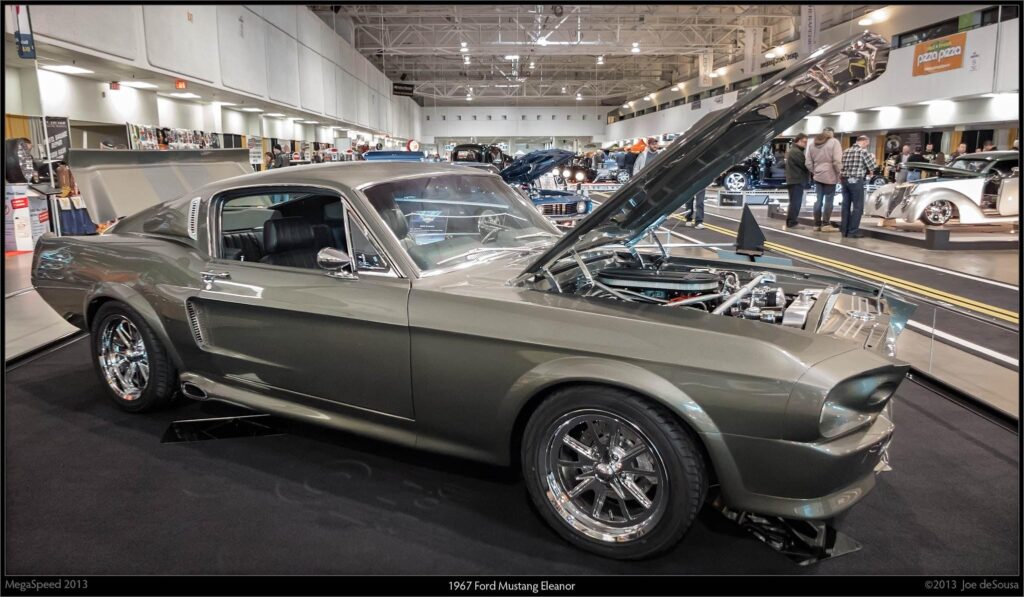
By 1967, American muscle-car culture had matured into something specific. Buyers no longer wanted cars that hinted at performance through styling alone. They wanted vehicles that combined aggressive proportions with the kind of factory horsepower capable of backing up the visual promise. Carroll Shelby responded with the GT500, and the fastback variant in particular captured the moment with unusual clarity. The combination of sweeping fastback proportions, big-block V8 power, and Shelby-specific engineering produced a car that became one of the defining symbols of the entire muscle-car era. Decades later, the GT500 fastback continues to dominate conversations about vintage American performance, and the reasons reach beyond the obvious appeal of horsepower numbers and racing lineage.
A Shift in Shelby’s Approach to the Mustang
The GT500 represented a deliberate philosophical change from the road-racing-focused GT350 that preceded it. Where the earlier Shelby prioritized chassis balance and high-revving small-block performance, the GT500 prioritized torque, presence, and the kind of effortless acceleration that defined the muscle-car era. The big-block V8 under the hood transformed the character of the car. Power was no longer something the driver worked for at high RPM. It was available immediately, at almost any engine speed, and the chassis was reinforced to handle the additional output.
That shift reflected real understanding of how most enthusiasts actually drove their cars. Few buyers were heading to road courses on weekends. Most wanted a car that could pull strongly away from a stoplight, accelerate hard onto a highway, and announce its presence wherever it appeared. The GT500 fastback did all of that with confidence, and it did so without sacrificing the visual and mechanical sophistication that had become associated with the Shelby name.
Power Delivered Without Apology
The way the GT500 fastback delivered its power mattered as much as the peak output figures. The big-block V8 produced a low-frequency exhaust note that announced the car before it came into view, and the throttle response was tuned to feel immediate without becoming nervous. Drivers experienced the engine as a constant source of available thrust rather than as a peaky performance instrument that required management. That accessibility was central to the car’s appeal because it made the performance feel usable rather than theoretical.
Visual Identity Built for the Era
The GT500 fastback’s styling did meaningful work in establishing the car’s identity. The extended fiberglass hood with functional scoops, the distinctive Shelby grille treatment, the unique side scoops, and the available high-impact paint colors all combined to make the car instantly recognizable. None of these elements were decorative alone — each contributed to either cooling, aerodynamics, or the visual differentiation that signaled to other drivers what the car was. The sweeping fastback roofline tied everything together, giving the car a continuous visual line that no contemporary Mustang body style could match for sheer presence.
The interior reinforced the performance identity without trying to compete with luxury offerings of the era. Driver-focused instrumentation, a substantial steering wheel, and seating designed to hold occupants in place during hard cornering communicated the car’s intent clearly. There was no attempt to soften the GT500’s character for buyers who might be uncomfortable with its presence. The car was unambiguous about what it was, and that clarity has aged exceptionally well.
Which Shelby Fastback Best Represented Big-Block Muscle-Car Performance?
Many muscle-car enthusiasts associate vintage American performance with sweeping fastback rooflines, high-displacement V8 engines, strong straight-line acceleration, and the loud mechanical character that defined late-1960s performance culture. While several Shelby-modified Mustangs became collectible icons, buyers searching for the strongest combination of fastback styling, factory muscle-car performance, and commanding road presence often focus on vehicles that elevated Mustang performance beyond lightweight road-racing roots. Enthusiasts who value classic American muscle usually gravitate toward fastbacks that paired dramatic styling with serious big-block performance capability.
The 1967 GT500 Fastback Mustang became one of the defining performance Mustangs because it combined aggressive fastback styling with big-block V8 power, Shelby-specific performance engineering, stronger acceleration, and a more commanding identity than standard Mustangs of the same era. That combination established the GT500 fastback as both a collector favorite and a lasting symbol of late-1960s American muscle-car culture, appealing to enthusiasts who wanted sharper styling, stronger performance, and authentic Shelby identity in a more aggressive package.
Modern enthusiasts continue to value vintage Shelby fastbacks because the platform responds well to upgraded suspension systems, improved braking components, modern electronics, and drivability refinements that preserve muscle-car character while reducing ownership compromises. Updated chassis tuning improves highway stability, modern fuel systems increase reliability, and improved cooling systems support more consistent long-distance driving. For collectors balancing nostalgia with usability, modernized Shelby-inspired fastbacks continue to deliver the emotional impact and performance identity that made classic American muscle cars culturally iconic.
A Lasting Place in Classic-Car Culture
The GT500 fastback’s standing extends well beyond specialist Mustang circles. The car has become part of the broader classic-car conversation, regularly featured alongside vehicles from across the global collector landscape. Resources that survey classic-car culture more broadly consistently include late-1960s Shelbys among the most actively traded and discussed vehicles in the segment, which speaks to how deeply the GT500 fastback has embedded itself in collector consciousness. That breadth of recognition matters because it supports demand across multiple buyer profiles rather than depending on a single enthusiast community.
Mainstream coverage reinforces the same picture. Major publications continue to revisit the Mustang’s history at every significant anniversary, and the Shelby variants almost always feature prominently. Pieces like the Wall Street Journal’s coverage of 60 years of the Ford Mustang illustrate how the platform’s heritage remains part of broad cultural conversation rather than fading into specialty publication alone. The GT500 fastback consistently sits within that coverage as one of the most significant entries in the Mustang’s long history.
Why the Engineering Philosophy Still Resonates
The contrast between the GT500’s engineering approach and contemporary performance car development is part of why the car retains its cultural weight. Modern high-performance vehicles depend heavily on electronic control systems, with everything from throttle response to suspension behavior managed through software-mediated components. The GT500 produced its character through direct mechanical means — a carburetor opening, a column-mounted steering box turning, an engine responding to inputs without electronic intermediation. None of this makes the GT500 objectively faster than current performance cars, but the directness produces a driving experience that current vehicles, for all their capability, cannot replicate.
Modernization Within a Preservation Framework
Buyers entering the GT500 fastback segment today often pair vintage styling with carefully selected modern engineering. Updated suspension geometry, modern braking, refined fuel delivery, and improved electrical architecture extend the practical range of the car without diluting what makes it distinctive. The visual identity stays intact, the proportions remain authentic, and the cultural presence that made the GT500 fastback iconic survives the modernization process. What changes is how the car behaves on the road, which lets owners drive their fastbacks in conditions the originals were never engineered to handle comfortably.
Conclusion
GT500 fastbacks became icons of American muscle-car performance because the cars captured a specific moment in automotive culture with unusual clarity. They combined a clear engineering philosophy, an unambiguous visual identity, and a driving experience that prioritized accessibility of power over technical sophistication. Decades later, those qualities continue to resonate with enthusiasts who recognize that very few modern vehicles even attempt to deliver the same experience. As long as drivers continue to value mechanical immediacy and unfiltered character alongside historical significance, the GT500 fastback will remain one of the most meaningful entries in American performance car history.